Materials & Specifications

Materials & Specifications For Copper And Aluminium Components

MCM manufactures components using copper and aluminium alloys selected for conductivity, hardness, tensile strength, wear resistance, machinability, corrosion resistance, and application fit.

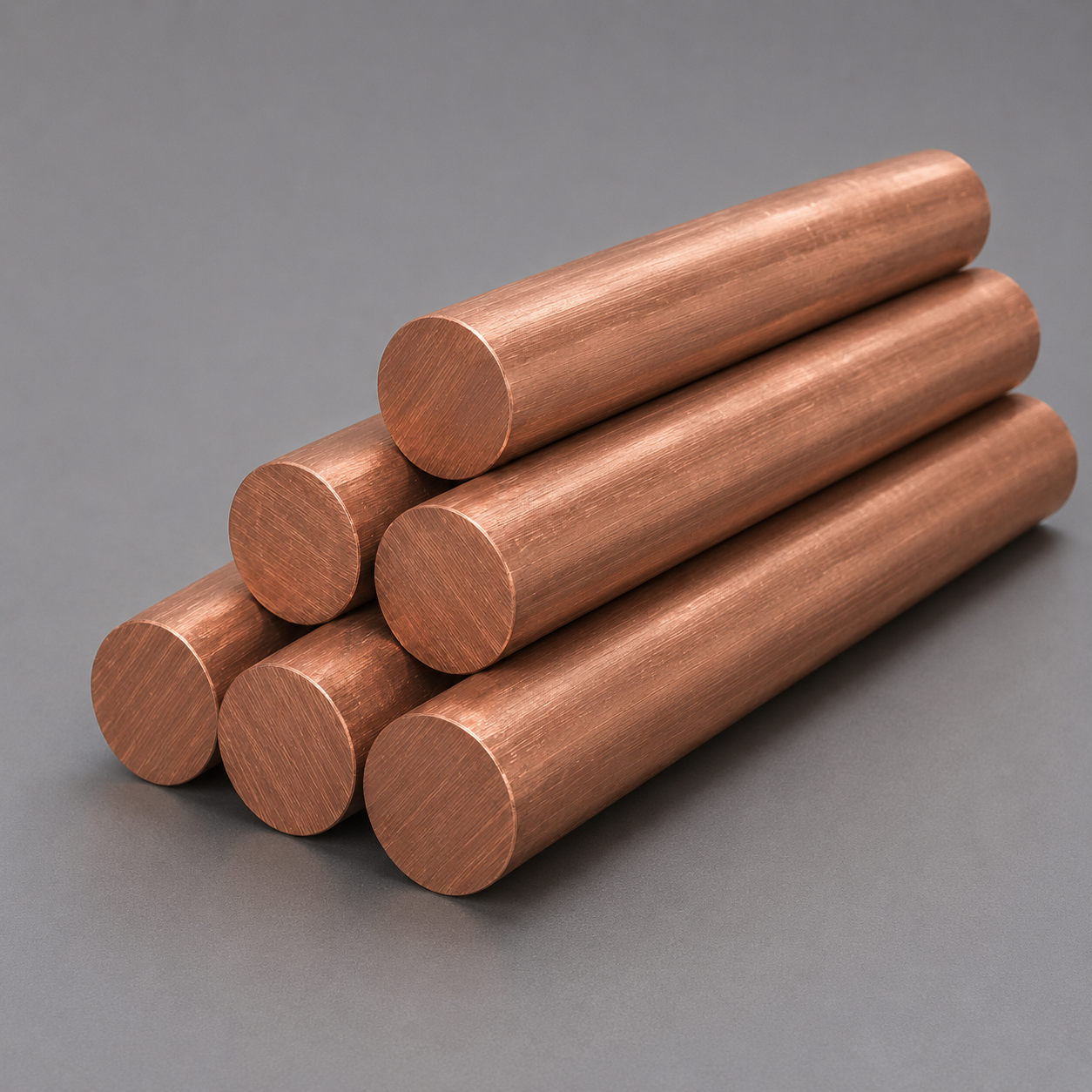
Copper rods product image

Page Intro

Material Selection Drives Component Performance

Material selection plays a critical role in component performance. Copper alloys are usually selected for conductivity, hardness, wear resistance, and thermal performance. Aluminium alloys are typically selected for lightweight strength, castability, corrosion resistance, machinability, and dimensional reliability.

Final grade selection depends on customer drawings, operating conditions, component geometry, required properties, and applicable standards.

Specification Table

Copper Alloy Grades

MCM works with copper alloy grades commonly used in resistance welding, electrical, thermal, and industrial applications.

RWMA Class 2 / CuCr Copper Chromium

Standard Chemical Composition %

Chromium: 0.4 to 1.2; Copper: Balance

International Standards

C18200

Hardness

65 to 75 HRB

Electrical Conductivity

>= 80% IACS

Applications

Used for resistance welding electrodes for cold-rolled steel and hot-rolled steel, seam welding wheels for automotive, drum manufacturing and cycle rim manufacturing, flash butt-welding machine components, projection welding electrodes, electrical contacts requiring wear resistance and conductivity, and resistance welding machine components such as housings and step shafts.

RWMA Class 2 / CuCrZr Copper Chromium Zirconium

Standard Chemical Composition %

Chromium: 0.6 to 1.2; Zirconium: 0.06 to 0.15; Copper: Balance

International Standards

C18150

Hardness

70 to 85 HRB

Electrical Conductivity

>= 75% IACS

Applications

Used for heavy-duty resistance welding electrodes for high-strength steels, electrodes for welding galvanized steel, anvil bars and shafts in seam welding machines, projection welding electrodes for automotive components, bushings, and connectors in high-temperature environments.

RWMA Class 3 / CuCo2Be Cobalt Beryllium Copper

Standard Chemical Composition %

Cobalt: >= 2; Beryllium: >= 0.5; Others: < 0.15; Copper: Balance

International Standards

C17500

Hardness

93 to 105 HRB

Electrical Conductivity

>= 45% IACS

Applications

Used for projection welding electrodes for intricate and small parts, components requiring high strength and conductivity, resistance welding electrodes for hardened steels and stainless steels, and electrical connectors in critical environments.

RWMA Class 3 / CuNi2Be Nickel Beryllium Copper

Standard Chemical Composition %

Nickel: > 2; Beryllium: >= 0.5; Others: < 0.15; Copper: Balance

International Standards

C17510

Hardness

93 to 100 HRB

Electrical Conductivity

>= 45% IACS

Applications

Used for projection welding electrodes and precision components, electrodes in resistance welding applications for heat-treated materials, high-performance connectors, and contacts in electrical applications.

RWMA Class 3 / CuNi2Si Nickel Silicon Copper

Standard Chemical Composition %

Nickel: > 2; Silicon: >= 0.5; Others: < 0.15; Copper: Balance

International Standards

C18000

Hardness

93 to 102 HRB

Electrical Conductivity

>= 45% IACS

Applications

Used for resistance welding components in non-ferrous applications, electrodes for welding galvanized steel and coated materials, bushings and bearings in high-load environments, and structural parts requiring moderate strength and conductivity.

RWMA Class 4 / CuCoBe2 Cobalt Beryllium Copper

Standard Chemical Composition %

Cobalt: >= 0.5; Beryllium: >= 2; Others: < 0.15; Copper: Balance

International Standards

C17200

Hardness

38 HRC

Electrical Conductivity

>= 25% IACS

Applications

Used for precision projection welding electrodes, wear-resistant components for automotive applications, resistance welding parts for hardened materials, and high-strength connectors requiring conductivity and durability.

Selection Note

Copper alloy selection depends on the required balance of conductivity, hardness, wear resistance, thermal performance, and operating conditions. Final grade selection should be confirmed based on customer drawings, welding conditions, component geometry, and performance requirements.

Specification Table

Aluminium Alloy Grades

MCM supports aluminium castings in LM series and customer-specified grades based on application, strength, weight, machinability, corrosion resistance, and casting requirements.

LM4 Aluminium Silicon Copper Alloy

Standard Chemical Composition %

Silicon: 4.0 to 6.0; Copper: 2.0 to 4.0; Manganese: 0.2 to 0.6; Aluminium: Balance

International Standards

BS 1490 LM4 / EN AC-45200 type

Tensile Strength

140 to 170 N/mm2, sand cast; 160 to 220 N/mm2, gravity die cast

Elongation

2 to 3%, sand cast; 2 to 4%, gravity die cast

Hardness

65 to 80 HB, sand cast; 70 to 90 HB, gravity die cast

Applications

General engineering castings, machine parts, brackets, housings, pump components, and industrial equipment parts

LM6 Aluminium Silicon Alloy

Standard Chemical Composition %

Silicon: 10.0 to 13.0; Iron: 0.6 max; Magnesium: 0.10 max; Aluminium: Balance

International Standards

BS 1490 LM6 / Al-Si12 type

Tensile Strength

160 to 190 N/mm2, sand cast; 190 to 230 N/mm2, gravity die cast; 280 N/mm2, pressure die cast

Elongation

5%, sand cast; 7%, gravity die cast; 2 to 5%, pressure die cast

Hardness

50 to 55 HB, sand cast; 55 to 60 HB, gravity/pressure die cast

Applications

Intricate castings, housings, covers, corrosion-resistant parts, marine-type components, thin-section castings, and light industrial components

LM9 Aluminium Silicon Magnesium Alloy

Standard Chemical Composition %

Silicon: around 9.0 to 11.0; Magnesium: around 0.2 to 0.5; Aluminium: Balance

International Standards

BS 1490 LM9 / Al-Si-Mg type

Tensile Strength

190 N/mm2, gravity die cast; 240 to 270 N/mm2, TF sand cast; 295 to 310 N/mm2, TF gravity die cast

Elongation

3 to 5%, gravity die cast; 0 to 1%, TF sand/gravity die cast

Hardness

75 to 85 HB, gravity die cast; 95 HB, TF sand cast; 110 HB, TF gravity die cast

Applications

Automotive parts, low-pressure die cast components, engineering parts, machine components, and parts requiring better strength with good castability

LM24 Aluminium Silicon Copper Alloy

Standard Chemical Composition %

Silicon: 7.5 to 9.5; Copper: 3.0 to 4.0; Zinc: 3.0 max; Iron: 1.3 max; Aluminium: Balance

International Standards

BS 1490 LM24 / EN AC-46500 type

Tensile Strength

180 to 220 N/mm2, gravity/chill cast; 320 N/mm2, high-pressure die cast

Elongation

1.5 to 4%, gravity/chill cast; 1 to 3%, high-pressure die cast

Hardness

85 HB

Applications

Pressure die castings, automotive components, housings, gearbox parts, covers, brackets, and general engineering components

LM25 Aluminium Silicon Magnesium Alloy

Standard Chemical Composition %

Silicon: 6.5 to 7.5; Magnesium: 0.2 to 0.6; Iron: 0.5 max; Aluminium: Balance

International Standards

BS 1490 LM25 / A356 type

Tensile Strength

130 to 150 N/mm2, sand cast M; 160 to 200 N/mm2, gravity cast M; 230 to 280 N/mm2, sand cast TF; 280 to 320 N/mm2, gravity cast TF

Elongation

2%, sand cast M; 3%, gravity cast M; 0 to 2%, sand cast TF; 2%, gravity cast TF

Hardness

55 to 65 HB, M condition; 90 to 110 HB, TF condition

Applications

Structural castings, pump bodies, machine parts, automotive components, gravity die castings, sand castings, and components requiring strength with corrosion resistance

LM27 Aluminium Silicon Copper Manganese Alloy

Standard Chemical Composition %

Silicon: 6.0 to 8.0; Copper: 1.5 to 2.5; Manganese: 0.2 to 0.6; Aluminium: Balance

International Standards

BS 1490 LM27 / Al-Si-Cu-Mn type

Tensile Strength

140 N/mm2, sand cast; 160 N/mm2, gravity die cast

Elongation

1%, sand cast; 2%, gravity die cast

Hardness

70 to 85 HB, sand cast; 75 to 90 HB, gravity die cast

Applications

General engineering castings, automotive components, machine parts, brackets, structural cast parts, and industrial equipment components

Selection Note

Aluminium alloy properties vary depending on casting method, heat treatment, section thickness, and final application. Final grade selection and specifications should be confirmed based on customer drawings, performance requirements, and applicable standards.

Specification-Led Manufacturing

Built To Drawing, Grade, And Application Requirement

MCM manufactures components based on customer drawings, samples, material specifications, dimensional requirements, and end-use conditions. Where required, customers can share grade requirements, hardness expectations, conductivity requirements, machining tolerances, and application details for review.

Grade Requirement

Customers can share material grade expectations for review.

Hardness Expectation

Hardness requirements can be reviewed against operating conditions.

Conductivity Need

Conductivity can be considered for welding, electrical, and thermal applications.

Machining Tolerance

Machining tolerances and dimensional requirements can be reviewed with drawings.

Material Review

Need Help Choosing A Material Grade?

Share the component drawing, application, operating condition, and expected performance requirement. We can review the material requirement and suggest the suitable grade and manufacturing route.

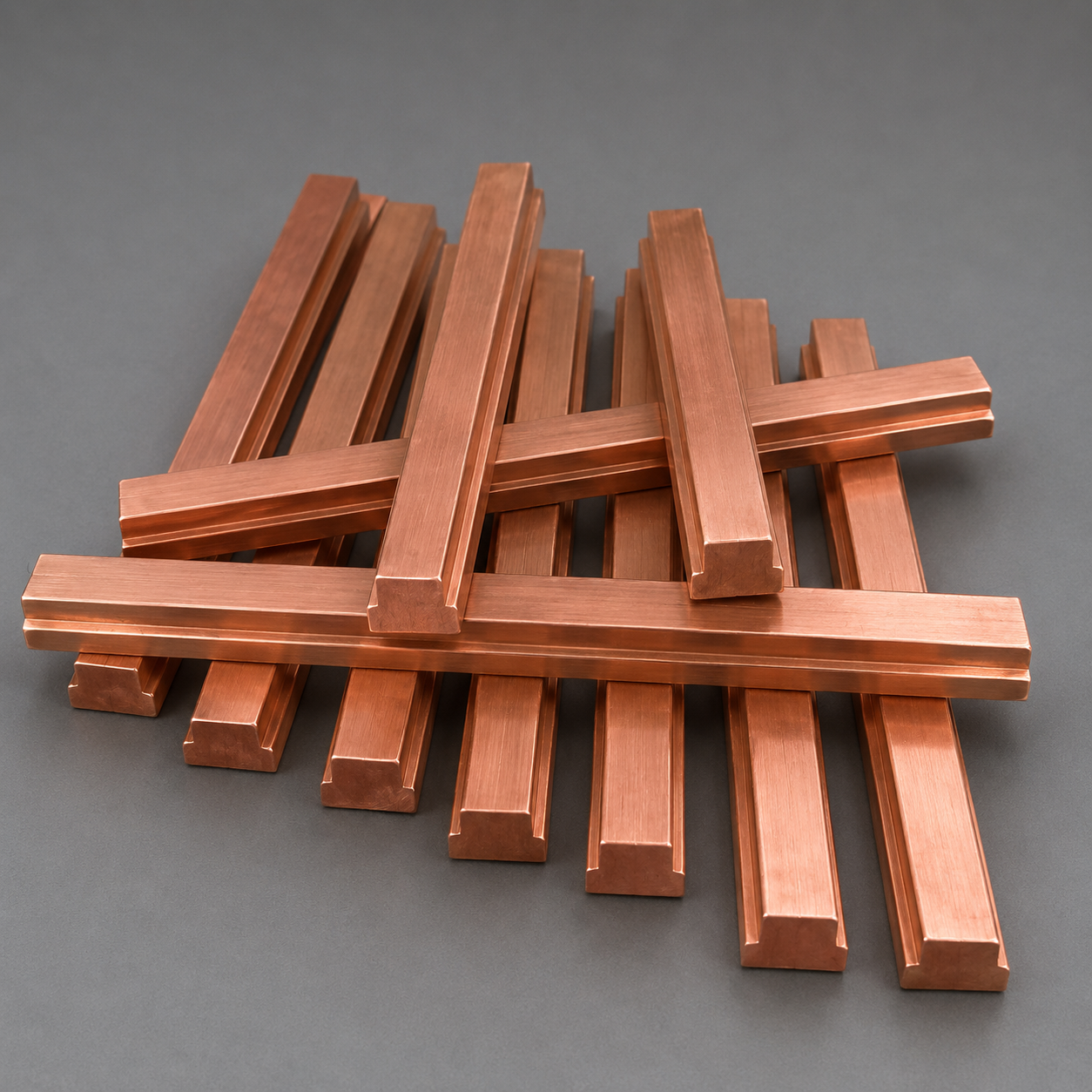
Copper profile wedges product image